













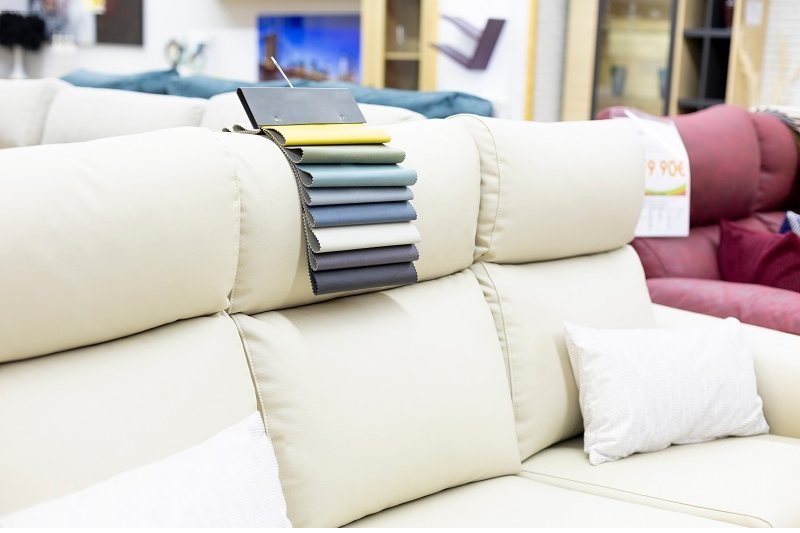
The seams are the first thing that fails. Not the cushions. Not the frame. The stitching that holds everything together tells you the actual construction standard of a piece long before the filling compresses or the legs start to wobble. Understanding what you’re looking at starts with the textile itself.
Couch fabric choices affect how stitching reads and how it performs, since tight-woven materials hold thread tension more consistently than loose-weave options do over years of regular use.
Thread Count Per Inch Tells You More Than Brand
Tight, uniform stitches compress the fabric edge without puckering. Loose or inconsistent stitching shows up as wavy seams, slight bunching at corners, or thread that visibly catches when you drag a fingernail along the seam line.
Ten stitches per inch is a reasonable baseline for upholstery. Fewer than eight on a structural seam means the hold depends partly on glue or staples beneath the surface, not the thread alone.
Where to Look That Most People Don’t
The underside of cushions. Welting seams at cushion corners. The back panel where the fabric meets the frame at the bottom edge.
These surfaces get the least attention in a showroom and absorb the most stress in actual use. A manufacturer who stitches carefully on the visible face but loosely on the rear panels is cutting cost where it shows last and fails first. Turn the cushion over before you decide.
What Double Stitching Actually Means
Two rows of parallel stitching don’t automatically indicate quality. Spacing matters considerably. Rows placed less than a quarter inch apart don’t add much structural benefit because they share the same fabric zone. The second row earns its keep when it runs far enough from the first to catch the material independently if the primary line fails under tension.
Welt cord seams on the cushion edges are where double stitching makes a real difference. That is the highest-stress seam on most upholstered pieces. Check whether the welt cord at corners runs continuously or gets rejoined, since that join is where separation typically starts.
Stress Points Worth Testing in the Store
Grab the armrest cover and pull it gently away from the frame. Run the seat cushion’s side seam between your fingers. Look at where the back upholstery terminates at the frame rail.
Each of those points is where upholstery separates first on a lesser piece. Quality construction holds those seams flat and tight without visible thread gaps. No looseness. No pulling away from the fabric underneath.
The Pattern Match Test
On a patterned fabric, misaligned joins across seams are a quick shortcut indicator. Factories that align patterns at seams invest more time and skill per piece. Factories that don’t, don’t, and the evidence is visible across the cushion face.
This applies most clearly to stripes and geometric prints. A stripe that jumps at the cushion seam tells you something specific about how much attention the production line gives to individual pieces, much like the care that goes into blind seams that disappear from view.
FAQs
How long should good upholstery stitching last?
Quality stitching on a well-constructed frame, used regularly, holds for 10 to 15 years without fraying or seam separation under normal household conditions.
Is machine stitching worse than hand stitching on furniture?
Modern industrial machines produce more consistent tension than hand stitching. The quality depends on stitch density and machine calibration, not the method itself.
What thread material holds up best on upholstered furniture?
Polyester thread outlasts cotton in upholstery applications because it resists moisture, UV exposure, and abrasion better over the life of the piece.